Showing posts with label dancing. Show all posts

Monday, June 19, 2023

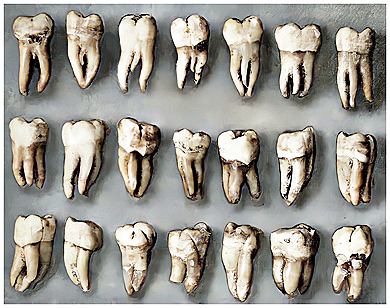
if Vincent Van Gogh had been a dentist instead

Woody Allen, “If the Impressionists Had Been Dentists” in Without Feathers. New York: Random House, 1975, p. 199— 

Dear Theo—

Will life never treat me decently? I am wracked by despair! My head is pounding! Mrs. Sol Schwimmer is suing me because I made her bridge as I felt it and not to fit her ridiculous mouth! That’s right!… I decided her bridge should be enormous and billowing, with wild, explosive teeth flaring up in every direction like fire! Now she is upset because it won’t fit in her mouth! She is so bourgeois and stupid, I want to smash her! I tried forcing the false plate in but it sticks out like a star burst chandelier. Still, I find it beautiful. She claims she can’t chew! What do I care whether she can chew or not! Theo, I can’t go on like this much longer! . . .

Vincent

Friday, December 18, 2020

i do not want a wide reading audience even if…

Richard Halls (1938) US government travel poster
Patricia Nelson Limerick, “Dancing with Professors: The Trouble with Academic Prose” in The New York Times Book Review, 31 October 1993, p. 3—

“We must remember,” he [a classics professor] declared, “that professors are the ones nobody wanted to dance with in high school.” This is an insight that lights up the universe—or at least the university. It is a proposition that every entering freshman should be told, and it is certainly a proposition that helps to explain the problem of [unintelligible] academic writing. What one sees in professors, repeatedly, is exactly the manner that anyone would adopt after a couple of sad evenings side-lined under the crepe-paper streamers in the gym, sitting on a folding chair while everyone else danced. Dignity, for professors, perches pre-cariously on how well they can convey this message: “I am immersed in some very important thoughts, which unsophisticated people could not even begin to understand. Thus, I would not want to dance, even if one of you unsophisticated people were to ask me.” Think of this, then, the next time you look at an unintelligible academic text. “I would not want the attention of a wide reading audience, even if a wide audience were to ask for me.”

Tuesday, December 18, 2018

Robert Frost and Darwin | Metamorphosis

Visual metamorphosis
Above Fr. Schmidt, Table 2. Evolution of household articles, animals, etc. according to Darwin's doctrine. Hand-colored lithographic, c. 1870s. Courtesy the Wellcome Library. Creative Commons license CC by 4.0.

•••

Louis Untermeyer, Bygones: The Recollections of Louis Untermeyer. New York: Harcourt, Brace and World, 1965—

[As a young writer]…I was much given to a style that employed epigrammatic checks and balances, appositions, paradoxes, and puns. I remember dismissing a rather commonplace collection of Gaelic poetry as "A Child's Garden of Erse" and characterizing the author of an abortive American epic as "A Yankee Doodle Dante." I referred to a Dowson-Beardsley pastiche as being "less erotic than Pierrotic. I inquired, since much of the Restoration comedy of manners took place in elegant country houses, was it not a comedy of manors? [p. 44]…

[His friend] Robert Frost, the most penetrating as well as the most profound poet of our time, might be expected to have been an anti-punster. On the contrary, he made point after point by punning; one of the favorite games during our fifty-year friendship was hurling word-plays at each other. He insisted that the most American trait was a combination of patriotism and shrewdness; he called it "Americanniness." He made fun of Mussolini and his cultural pretentions as the poet's dictator, "the great Iamb." He wrote about the liberal lugubrious poetry of Conrad Aiken and spelled the name "Conrad Aching." Ezra Pound was, he said, a glittering confuser of showmansip and erudition, a "Greater Garbler." "T.S. Eliot and I have our similarities and our differences," he wrote to me. "We are both poets and we both like to play. That's the similarity. The difference is this: I like to play euchre; he likes to play Eucharist." [pp. 45-46]

Monday, January 2, 2012

I've Got A Room in Chicago

Canadian Pacific Railway (1940s)

Anon: I've got a room in Chicago, and she's got a flat behind.

Francois Rabelais: Nature abhors a vacuum.

Tennessee Williams: A vacuum is a hell of a lot better than some of the stuff that nature replaces it with.

Charles Bragg: Nature abhors a vacuum cleaner salesman.

Anon: Hey. Pop! Vot is a vacuum?
—A vacuum is a void.
—I know it's a void, but vat does dat void mean?

Anon: Sorry about my dancing. I'm a little stiff from badminton.
—I don't care where you're from. You'll never dance with me again.

Henry Moore: [Before getting married] I had argued with all my friends that really artists shouldn't get married, they should be married to their art. After all Michelangelo wasn't married, Beethoven wasn't married and so on, all the examples of really good artists who weren't married; but after meeting Irina [his future wife], I began to say Rembrandt was married, Bach had twenty children and so on. All this attitude changed, and within six months we were married.