 |
| Newly edited Joseph Langland video |
Wednesday, November 16, 2022
Willi Baumeister cartoon / Hitler in electric chair
 |
| Schlemmer (left) and Baumeister |
Willi Baumeister, in Hellmut Lehmann-Haupt, Art under a dictatorship. New York: Octagon Books, 1973, page 87—
My friends in Wuppertal, Oskar Schlemmer among them, sent me humorous letters and postcards from time to time, with paste-up pictures and surrealist texts. I sent them, rather naively, a cartoon, cut from a US newspaper, of an electric chair with Hitler on it. Suddenly I was summoned to Gestapo Headquarters. I was confronted by the Gestapo censor with my entire correspondence for the last year and a half. Thank God, Hitler in the electric chair was not among the intercepted letters. I extricated myself by writing a long report to the Gestapo, explaining that these were plans for a book dealing with color modulation and patina, in connection with an especially resistant paint for the camouflaging of tanks and pill boxes.

Tuesday, November 15, 2022
today I bought a dress that is made out of wood
Ione Robinson, A Wall to Paint On. New York: E.P. Dutton, 1946, p. 373-374, while visiting Berlin, from a letter dated November 8, 1938 (less than a year in advance of the start of World War II) —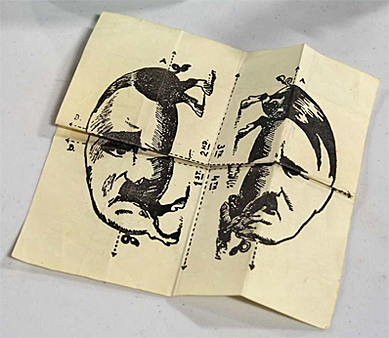
Where is the fifth pig?
Today I bought a dress that is made out of wood. I still can't believe it. In fact, there was not one “natural” item in this department store; everything was synthetic. In an arcade on Unter den Linden, I spent a long time looking at photographs of Hitler and I bought a series of tiny "flap” [flip book] photos which, when you riffle them fast, make him come to life like a miniature movie. The one I have shows him making a speech and if you riffle the pages slowly the gestures are so calculated and ridiculous they make you laugh—although that is one thing I have not seen people do in this city.
The people in the streets [of Berlin] look worn and tired. Life is completely regulated. There are signs every few feet, telling one what to eat and believe. Money is controlled. Four dollars a day is about all you can spend. In a certain sense, this makes life very simple—you know exactly what you can and cannot do. Even though certain things could be achieved through such a system, I don't see how anyone could be happy. I begin to feel as though I were living in a well-run jail. There is the same security of a bed at night, something to eat, and a few hours of “forced” recreation. But the realization that one must constantly yield to the will of a single man takes all the incentive and moral force from a human being.
Sunday, November 13, 2022
always in the throes of a long drinking bout
 |
| photograph of Amedeo Modigliani |
PARIS, Feb. 6—H. Hodglieni [sic] [Amedeo Modigliani], an artist, who claimed to have invented cubist painting, was found dead in a hovel in the Latin Quarter. He used to frequent Paris cafés dressed in trousers with legs of different colored materials.
•••
Ilya Ehrenburg, People and Life: memoirs of 1891-1917. London: MacGibbon and Kee, 1961, p.143—
…no one now can give an exact description of how [artist Amedeo] Modigliani used to dress: when times were good he wore a coat of light velvet with a red silk scarf round his neck, but when he was in the throes of a long drinking bout, ill and penniless, he was enveloped in brightly colored rags.

Tuesday, November 8, 2022
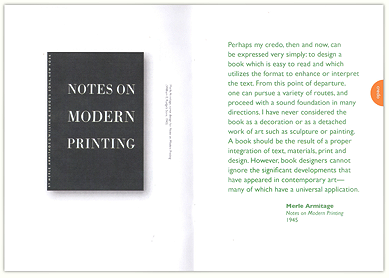
Armitage as impressario and aristocrat of art
•••
Ione Robinson, A Wall to Paint On. New York: E.P. Dutton, 1946, page 79—
The heat is stifling, and I have spent most of the day sitting [in Los Angeles] in the Plaza waiting to meet the Mexican Consul. I tried to forget the heat by reading something Merle Armitage gave me as I was leaving: a copy of his address before the California Art Club's Open Forum. It didn't help me bear the heat; in fact, it really frightened me, because Mr. Armitage seems to want to be the Lorenzo de Medici of Los Angeles. Already everyone listens to him, and the younger artists at home are under his thumb, simply because he can afford to buy a canvas when he wants to (although he never spends over a certain amount on any canvas, which is so small that in the end it does not really help a poor painter). But in this speech he is trying to prove that there is an “aristocracy in art”: he carefully quotes Webster on the definition of Aristocrat and Common, and then tries to twist a special meaning out of these words that will justify his right to judge esthetics. I really believe that he would like to feel that he is the arbiter of greatness in the art of our time. He believes that the masses of people have nothing to contribute to art, nor is their judgment to be relied upon, and argues that without people like himself there would never have been artists and writers like El Greco and Voltaire. What he forgets is that El Greco and Voltaire painted and wrote for the people, and not just for men like Merle Armitage. He actually wrote this: “How can the really common people have anything in common with, anything of sympathy for, as aloof and aristocratic a thing as art? If left to the common people, and I use the word ‘common’ as I have previously defined it, there would be no art.” The reason this frightens me is because Mr. Armitage is already the manager of the Los Angeles Grand Opera Association, and now seems on the verge of being the impresario of painters in California. I am glad I'm going to Mexico.
 |
| Ione Robinson (source) |
Saturday, November 5, 2022
tobacco road / the story of a boy who smoked

Do you know any little boy that [sic] smokes cigarettes? If you do, just show him this picture. It is the sad story of Dick Sillypate. He saw another boy smoking a cigarette, and thought it looked so manly that he would try it himself. The picture shows what happened to him at the end of five months.
Friday, October 28, 2022
having a whale of a time on Nantucket Island

A singular custom prevails here [on Nantucket Island] among the women, at which I was greatly surprised, and am really at a loss to account for the original cause that has introduced in this primitive society so remarkable a fashion, or so extraordinary a want. They have adopted these many years the Asiastic custom of taking a dose of opium every morning; and so deeply rooted is it, that they would be at a loss how to live without this indulgence; they would rather be derprived of any necessary than forego their favorite luxury. This is much more prevailing among the women than the men…though the sheriff…has for many years submitted to this custom. He takes three grains of it every day after breakfast, without the effects of which, he often told me, he was not able to transact any business.
Saturday, October 8, 2022
the man who made distorted rooms / a trilogy

Wednesday, September 28, 2022
El Lissitzky Loren Eiseley and S. Howard Bartley

•••
S. Howard Bartley [his autobiography], A Bit of Human Transparency. Bryn Mawr PA: Dorrance, 1988—
…This is about a little boy who had no brother or sisters and only occasional playmates. He lived in a world of imagination. Imagination filled his life and he didn't learn much about people. It was his Aunt Clara and his grandmother who mainly made up the human circle for him. His mother had died when he was three weeks old. Although his father was part of the family, he didn't count. Later his [father's] stern discipline left its mark. So this story is also about the boy reaching manhood and a career as scientist and teacher, and about his impressions and outlook on life.
This boy was me, and from here on I'll tell my own story.
…
Another person who has enriched my life is Loren Eiseley, the noted anthropologist. First of all he reached me because he, like me, was a loner as a little boy. His description of his childhood [in All the Strange Hours] is one of the most fascinating and touching modern tales I ever read. It, with his career, is an example of what can develop when a child is left alone enough to think and wonder—as in constrast to what happens when a child jostles elbows all day long wth other children. From this comes politicians and the opposite of scholars.
Friday, September 23, 2022
film trilogy on artist / scientist Adelbert Ames II
 |
| Colleagues Gary Gnade and John Volker in an Ames Room |
I began to research and to write about Ames in the late 1960s, and, in the many years since, I’ve continued to collect a fairly substantial amount of material related to him, including unpublished correspondence. I have always hoped to write a book about his life and ideas, but it was delayed by various circumstances, and now, as I age—and books become less useful as ways to share ideas—that project is on the back burner. So I have turned instead to making a series of video talks. Not the same thing, obviously, but it will do for the moment.
The first video in the series, titled Ames and Anamorphosis: THE MAN WHO DISTORTED ROOMS / Part One, was completed earlier this month, and is accessible online. It provides an overview of Ames’ life and his accomplishments, as well as information about his interesting family (he was related to writer / editor George Plimpton).
 |
| Ames and Anamorphosis / Part One |
Part Two is all but finished, and should be available on the same channel in a matter of days. It documents the use of anamorphic distortion (forced perspective) in the history of art and in the research of vision. Although the Ames Demonstrations were highly unusual when they gained popularity in the 1940s, the optical principles on which they were based had been anticipated by Leonardo da Vinci, Hans Holbein, various Dutch artists, and, in science, by Hermann von Helmholtz.
Part Three will consist of an overview of the connections between the Ames Demonstrations, and various artistic and scientific achievements that took place during and after his lifetime, such as avant garde filmmaking, perspective distortion in ship camouflage, Hoyt Sherman's vision laboratory at Ohio State University, comedian Ernie Kovacs, theatrical special effects, the reverspective artworks of British artist Patrick Hughes, and so on.
In the early 1970s, I reconstructed several of the Ames Demonstrations, and, collaborating with a friend and colleague, John Volker, I designed a multi-faceted hands-on exhibition, in which children could experience a full-sized distorted room, a straight-forward forced perspective room, an upsidedown room, and so on. Over the years, I went on to publish articles about various aspects of his work in research journals, the online links to some of which are listed below.
•••
Behrens, R. R. (1987). The Life and Unusual Ideas of Adelbert Ames Jr. Leonardo: Journal of the International Society of Arts, Sciences and Technology, 20, 273–279.
Behrens, R. R. (1994). Adelbert Ames and the Cockeyed Room. Print magazine, 48:2, 92–97.
Behrens, R. R. (1997). Eyed Awry: The Ingenuity of Del Ames. North American Review, 282:2, 26–33.
Behrens, R. R. (1998). The Artistic and Scientific Collaboration of Blanche Ames Ames and Adelbert Ames II. Leonardo, 31, 47–54.
Behrens, R. R. (1999). Adelbert Ames, Fritz Heider, and the Chair Demonstration. Gestalt Theory, 21, 184–190.
Saturday, September 10, 2022
a remote radio drawing course taught in 1932

Moholy’s experiment comes to mind whenever I see this vintage magazine article on so-called “Radio Comics” [shown above], as published in an issue of Popular Mechanics in 1932. The instructor is a radio broadcaster, who makes a drawing on a grid-based page, consisting of 144 numbered squares. His pupils, who are listening remotely to the broadcast, have been given an indentical page of numbered squares—but without a drawing.
“As the instructor draws a figure, he calls out the squares touched by his pencil or crayon. Pupils sitting at the radio with duplicate charts trace lines from one number of another as they are announced in efforts to ‘copy’ the work of the instructor.”
Actually, the only thing innovative about this (at the time) was the use of the radio. The practice of “squaring off” a drawing (called mise au careau) in order to copy, enlarge or reduce the image onto a second squared-off surface, was practiced as early as the Ancient Egyptians. Here is an example of that by the artist Sassoferrato.

“If you wish to learn correct and good positions for your figures [he wrote], make a frame that is divided into squares by threads and put it between your eyes and the nude you are drawing, and you will trace the same squares lightly onto your paper on which you intend to draw your nude.”

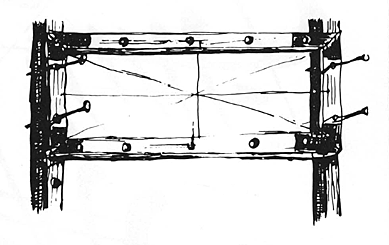
After the invention of photography, artists began to square off photographs of their models, as a gridwork guide for drawing. Still other artists (among them Blanche Ames Ames and Adelbert Ames II) make efficient use of large-scale grid-based frames which the model stood behind as the photograph was made. Below is a photograph of that in her Borderland studio.

Tuesday, July 19, 2022

Sunday, July 10, 2022
beak of the pelican holds more than his belican
 |
| more>>> |
Oh, a wondrous bird is the pelican!
His beak holds more than his belican.
He takes in his beak
Food enough for a week.
But I'll be darned if I know how the helican.
Thursday, July 7, 2022

Wednesday, July 6, 2022

a retrospective reverie on 46 years of teaching

Each presentation was limited to fourteen minutes. Having retired at the end of 2018, after having taught graphic design illustration and design history at various art schools and universities for more than 45 years, my presentation consisted of an 8-minute retrospective reverie on my memories of working with students, titled Solving Problems in Design. This was presented as a video, and can now be viewed online.
Sunday, June 26, 2022
improvisation on stage / unrehearsed adjustment
 |
| Mary Garden |
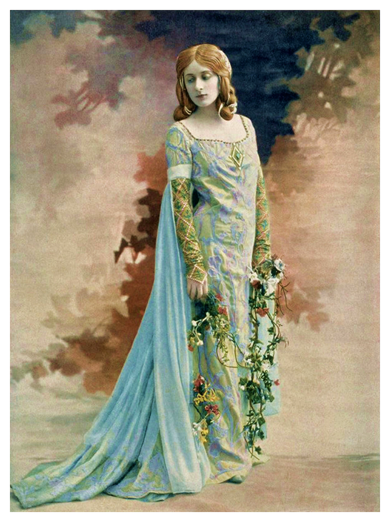
We were thrilled [having been given tickets to attend a performance of Le Jongleur, an opera starring the famous soprano Mary Garden]…we had never seen it, longed to do so, had not been able to afford seats. The performance outstripped even our expectation; Mary Garden was an exceptionally skilled actress as well as an exceptionally fine singer. She was also a first-rate “trooper.” The market scene came to an end; the stage was being cleared for her entrance, the crowd dispersing; suddenly in the very center of the stage a donkey refused to budge, straddled his legs and performed an act which had been rehearsed. The audience grasped, then rocked with laughter; the donkey, satisfied, made an effective exit. Mary Garden entered upstage center, seemed not even to glance at the spot where she would otherwise have stood, crossed down a little to the left of it and began to sing. In one second there was not a sound from that crowded house.
Saturday, June 25, 2022
a report of naiveté in assessing works of art
Abel Warshawsky, The memories of an American Impressionist. Kent OH: Kent State University Press, 1980, p. 62—
Cavern [detail] © Roy R. Behrens 2021
[In Paris] The "cult of the naive" at all costs became a rage…
A group of painters in Montmartre decided to exploit this hysteria and have some fun with the critics. Procuring a donkey, they tied a large paintbrush to his tail, first dipping the brush into an assortment of colors. Then a canvas was set up within striking distance of the donkey's tail, which in its gyrations soon covered the canvas with a weird conglomeration of colors—quite a stunning study in the new style, as the spectators all agreed. Witnesses and a notary, who had been invited to attend, attested to the manner in which the work had been done. This canvas was framed and sent to the Salon des Independants. It bore as title, if I remember rightly, Sunset on the Red Sea. After several well-known critics had remarked it and written about it as a work of extraordinary interest, the story with the signatures of the witnesses was published, and the laugh was on the "new art" critics.
Also see Art by Animals video, Desmond Morris, and pandemic montages.
Friday, June 24, 2022
adrift in milan / never too late for the last supper
Abel Warshawsky, The memories of an American Impressionist. Kent OH: Kent State University Press, 1980, pp. 86-87—
Wind Instrument [detail] © Roy R. Behrens
In connection with the Last Supper, a friend of mine, Samuel Cahan, a well-known newspaper artist who had been with the New York World for thirty years, told me of an amusing incident which occured when he and his wife visited Milan a few years ago. Speaking no Italian, they had asked their hotel porter to procure an English-speaking cabby to take them about. To the latter my friend very carefully explained that they wished to see the Last Supper. "Last supper?" replied the cabby, "yes , yes. Me understand!" Whereupon he started driving them round the town and finally into the country.
After the drive had extended for several miles, my friend, fearing that there must be some mistake, repeated his instructions to the driver. "Last supper?" he yelled back, "Sure! Me understand!" and continued to drive. Late that evening the two Americans were finally brought back to the city in a state approaching nervous exhaustion. Drawing up his carriage in front of a brilliantly lit edifice, the vetturino opened the cab and ushered his fares into a fashionable restaurant, proudly giving them to understand that he had brought them back in good time for the desired "late supper."
Thursday, June 23, 2022
democratic privilege and the queen's bladder


•••
Muriel Spark, Momento Mori. New York: Penguin Books, 1961—
The real rise of democracy in the British Isles occurred in Scotland by means of Queen Victoria’s bladder…When she went to stay at Balmoral in her latter years a number of privies were caused to be built at the backs of little cottages, which had not previously possessed privies. This was to enable the Queen to go on her morning drive round the countryside in comfort, and to descend from her carriage from time to time, ostensibly to visit the humble cottagers in their dwellings. Eventually, word went round that Queen Victoria was exceedingly democratic. Of course it was due to her little weakness. But everyone copied the Queen and the idea spread, and now you see we have a great democracy.
Thursday, June 16, 2022
online course on the history of design / 2022
Above This is a brief film overview of a four-week course I will be teaching (online), beginning in the first week in October, titled A History of Design: Graphic, Industrial, and Architectural Design in Europe and the US Since 1850. This is Part Two of a series of four. It is one of the fall semester offerings through OLLI at Drake (Oster Lifelong Learning Institute at Drake University). Registration will open during August at <https://alumni.drake.edu/olli>. 
Course Introduction Video
Monday, June 13, 2022
Coming Soon / Graphic Design Symposium

The concluding highlight of the exhibition will be a two-day symposium, to be held on June 23 and 24, in the Art Loft Conference Room, Art Lofts Building, in the Department of Art, University of Wisconsin-Madison at 111 North Frances Street, in Madison. Some participants are attending in-person, while others (worldwide) are registering online for free tickets, and, since it is a hybrid event, they will participate online as speakers, panelists and observers.
Please note, although participation is free, you must register at this link in advance.
 |
| Iowa Insect Series (stages animated) |
Included in the exhibition is a series of ten large-scale digital montages, called the Iowa Insect Series, that were made in 2012-2013 in collaboration with design colleague and friend David M. Versluis. At the time, he was a Professor of Art and Design at Dordt College in Iowa, while I was then on the faculty at the University of Northern Iowa in Cedar Falls.
Also on exhibit are thirteen design-related images that are part of my long-term, continuing research (as a design historian) of World War I Allied naval camouflage. The theme uniting these artifacts is high difference or disruptive ship camouflage, which was referred to at the time as dazzle painting or dazzle camouflage. Among the items exhibited are restored government photographs from the time period, full-color reproductions of diagrams of the camouflage patterns, and my own recent hypothetical camouflage schemes, derived from historical works of art.
 |
| Iowa Insect Series |
Friday, June 10, 2022
exhibition viewing tour at Jester Nature Center

The OLLI course exhibit tour was supplemented by in-person presentations about national parks and comparable locations by Jester Center staff members Lewis Major and Patrice Petersen-Keys. All posters in the exhibition can also be viewed online in this short video.
 |
| Mesa Verde Poster © Roy R. Behrens |
Monday, June 6, 2022
pachydermatitis: there's an elephant on the hill

Friday, June 3, 2022
Going with the Grains / Andrew Clemens' Art

Friday, May 27, 2022
Artist Dean Schwarz and Family and Friends

Dean is 84 this year, and I am 76, and our friendship (along with my great fondness for his wife, author Gerry Schwarz) has continued, uninterrupted, all these many years. Most recently, it was a pleasure to be asked to design the card invitation and a photographic film tribute for a new exhibition of pots and his other creations at the Hearst Center for the Arts, in Cedar Falls IA. Titled DEAN SCHWARZ AND FAMILY AND FRIENDS, the exhibition begins on June 4 and continues through July 17, 2022.
There is a public reception on June 18, from 10:30 am to Noon. It is described as follows: Visit The Hearst to experience the world of Dean Schwarz through his work and the work of some of his family and friends. Collaborative ceramics by sons Gunnar and Lane Schwarz and grandchildren Marguerite, William and Sophie are featured alongside Jeff Bromley’s boxelder and soft maple furniture.

Dean Schwarz (© Emily Drennan) 
Ceramic Art by Dean and Gunnar Schwarz
Saturday, May 21, 2022
Coming Soon / Evolving Graphic Design Exhibit

The exhibit’s originator, organizer and curator is Yeohyun Ahn, Assistant Professor of Graphic Design and Interactive Media, in the Graphic Design Program, UW-Madison Department of Art. Detailed information about the exhibition is online here. And you learn more about Professor Ahn at this link.
I am pleased that my work is included in two components of the exhibition. In one will be exhibited a series of ten large-scale digital montages, called the Iowa Insect Series, that I made in 2012-2013 in collaboration with design colleague and friend David M. Versluis. Having retired from teaching recently, he now resides in Michigan. But at the time, he was a Professor of Art and Design at Dordt College in Iowa, while I was then on the faculty at the University of Northern Iowa.
These works began with David’s high definition digital scans of various insect specimens from his collection. We worked together by what might be referred to as “blind collaboration.” To begin, he would email me one of the insect image scans. I then did something to alter or augment that image (somewhat like a move in chess), and returned the result by email to him. He then made additional alterations, and sent that second result to me. We continued blindly, back and forth, exchanging subsequent alterations, until we both began to sense that the work was nearing completion. We did this on ten occasions. All ten will be exhibited in the UW-Madison exhibition. No doubt the effect will be stunning.
In another area of the exhibition, I will also be exhibiting thirteen design-related images that are part of my long-term, continuing research (as a design historian) of World War I Allied naval camouflage. The theme uniting these artifacts is high difference or disruptive ship camouflage, which was referred to at the time as dazzle painting or dazzle camouflage. Among the items exhibited are restored government photographs from the time period, full-color reproductions of diagrams of the camouflage patterns, and my own recent hypothetical camouflage schemes, derived from historical works of art.
A highlight of the exhibition will be a symposium, titled Evolving Graphic Design, to be held on June 23 and 24, in the Art Loft Conference Room, Art Lofts Building, in the Department of Art,
University of Wisconsin-Madison at 111 North Frances Street, in Madison. I will participate in that symposium, by online presentation.

Sunday, May 8, 2022
booksartlanguagelogicambiguityscienceteaching

cover of issue 02 of BALLAST (1985)
Question: So how did BALLAST begin? 
actual frame from a silent film
Answer: In the late 1960s, when I (of all people) was drafted into the US Marine Corps, I found that some of the officers, while cruel and unusual, could also be terribly funny. One of my favorites was a height-impaired captain, a George Gobel look-alike, who was the company adjutant when I was in Hawaii. He was hilarious—always. One day a top-ranking officer came to our company (a Marine general), and this adjutant sent word that I should report to his office immediately. As I stood frozen at attention (awed by the mere presence of such a distinguished warrior), the captain turned to him and said, “General, the sergeant here is a very curious specimen. He is college-educated, and, as a result, is completely unable to answer any question with a simple yes-or-no answer.” And then, turning to me, he asked, “Isn’t that true, Sergeant?” After a measured pause, I slowly and thoughtfully answered, “Well, not entirely, Sir. You see, there’s this and that and that and that…” and of course, to his delight, I droned on for a couple of minutes. more>>>

cover of issue 01 of BALLAST (1985)
Wednesday, May 4, 2022
National Parks at Jester Park Nature Center
 |
| National Park Poster © Roy R. Behrens 2019 |
The poster exhibit at Jester Park was installed earlier this week, and will remain on view at the Nature Center Galleries there through August 28. It will officially open with an in-person reception (free and open to the public), including wine and refreshments, on Thursday, May 12, from 6 to 8 pm. Sounds wonderful.
 |
| Exhibition at Jester Nature Center |
And of course it’s also an opportunity to see other on-going exhibits in the same building, including the work of glass artist Tilda Brown Swanson, as well as permanent features as well. There is additional information at this online link.
For those who live too far away, or who can’t attend in person for other reasons, the posters can easily be accessed online. For example, all the posters are the internet (click on each to enlarge it to view) at this link. But they can also be experienced in video form online at YouTube here.
There also another online component that quite a few people have found of interest in understanding the significance of how color, shapes, and other pattern attributes contribute to animal camouflage. It’s a succinct 30-minute video talk on Nature, Art and Camouflage, also free on YouTube. A screen grab from the video is reproduced below, as is one of the National Park posters.
For the opportunity to share the posters at the Jester Park Nature Center, I am especially grateful to Missy Smith, Nature Center Coordinator, and Lewis Major, Naturalist.
 |
| video on Nature, Art and Camouflage |
Thursday, April 21, 2022
Independence, Iowa and William Edwards Cook

Roy R. Behrens, Emeritus Professor of Art at the University of Northern Iowa and Independence native, has released a new 60-minute online documentary film about Iowa expatriate artist William Edwards Cook, and his close long-term friendship with American writer Gertrude Stein…The film is available free online at <https://youtu.be/oph7fCHHHNI>. Other films by Behrens are also online at his YouTube channel at <https://www.youtube.com/channel/UCzYrUfsAvkZur5cBv6xlhSg>.

Monday, April 11, 2022
blind prejudice / the thing to fear is fear itself
Jay Partridge, A Wonderful Experience: A Memoir. Independence IA: Privately published, no date, p. 29—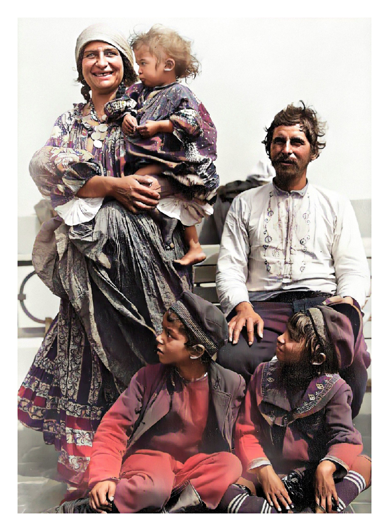
Gypsy family, public domain
[Growing up in southern Iowa] I remember only one fear I had when I was a child. It was a fear of Gypsies. Someone said Gypsies steal little boys to work for them. Every year Gypsies would camp over-night, sometimes stay a day or two, at the Mount Vernon school grounds on the corner west of the house.
Their dark skin, black hair and long dark dresses with capes or shawls all scared me. Mom thought their dress was better to hide things they stole. She always tried to keep them out of the house. They were always coming over to get something to eat and feed for their horses.
They traveled in little buildings on wagons pulled by horses. Sometimes there might be five or six loads of them. Seemed like next morning our cows never gave as much milk. The folks always though the Gypsies had come during the night and milked the cows. The folks also thought some chickens, eggs, feed, and maybe a pig were missing after the Gypsies were gone.
Anyway, I breathed easier when they left, because then I knew three little boys they hadn’t stolen.
•••
William L. Shirer, 20th Century Journey. New York: Simon and Schuster, 1976, p. 83—
[While growing up in Cedar Rapids IA] The fear of Indians by the acquisitive white settlers persisted for some time…Sometimes a stray and hungry Indian from the nearby Tama Reservation would come to the back door of our house to beg food and my worried mother would lock the doors and windows and, if the man persisted in knocking, call the police. We were brought up to believe that “the only good Indian was a dead Indian” and nothing was said to us in those days of the cruel and savage slaughter and the robbery of the Indians by the white Americans, one of the darkest sides of our history.
Monday, April 4, 2022
and a handkerchief used for dusting my shoes

[As a youngster in Baltimore, one day, Mencken was "held up by two tough boys and relieved of"] all: five keys, a horse chestnut, the snapper of a buggy whip, a dried cockroach in a pill box, a small shell, six agate marbles, a top, and a handkerchief used mainly for dusting my shoes. I also had two cents, but the bandits, after a long debate, decided not to take them, it would be stealing.
Subscribe to:
Posts (Atom)