Thursday, August 24, 2023

new poetry book with Mary Snyder Behrens art

It has been a pleasure to learn today about the upcoming publication of a new book of poetry by American poet J.D. Schraffenberger, titled American Sad. Its projected publication date is February 2024, but copies can be pre-ordered now, at an advance sale discount price. The author is editor of the North American Review and professor of English at the University of Northern Iowa. More book information, examples of the author's poems, and ordering information can be found here.

Full disclosure: Personally, I am especially pleased that a major artwork by my wife, Mary Snyder Behrens, as been chosen by the author for use on the cover. I live with this work, since it has been on view in our dining room for years, and I pass it multiple times in the course of a day. It is large, for the scale of a dining room wall (48h x 30w x 4d), encased in a plexiglas cover, and so multi-faceted and visually provocative that one cannot help but be drawn in. Titled American Canvas II, it is one of several comparable-sized, related works that she completed in 2002 (can it really have been 21 years ago?).  All of them are mixed media, dimensional compositions of cast-off detritus from our farm, bits of junk that farmers buried years ago (in the manner of amateur landfills), and which, during heavy rains, rise up again to the surface—and, in some cases, cause us harm. 

I for one could not be more delighted that the writer J.D. Schraffenberger has found some strand of common ground between the art he makes with words, and the visual verse that Mary constructs.

novelist Ruth Suckow / a celebration of her life

Suckow exhibition banner (2023)
On Saturday (two days from now), there is a gathering of the Ruth Suckow Memorial Association. Suckow (pronounced Soo-Co), who lived from 1892-1960, was a once highly-acclaimed novelist and short story writer from Iowa, whose work was resoundingly praised by the famous literary critic H.L. Mencken. Much more information about her can be found on an online Wikipedia biography site, including a list of her books, and a link to the Suckow Memorial Association, which was founded in 1966.

The association's annual gathering will take place this weekend at the Hearst Center for the Arts at 304 West Seerley Boulevard (a few blocks east of the University of Northern Iowa campus) in Cedar Falls IA on August 26. Beginning at 1:00 pm that day, there is a one-hour session that is free and open to the public. One of her novels, titled Country People, will be the primary focus of that afternoon session, in which a discussion will follow a series of short presentations by four association members, Bill Douglas, Jim O'Loughlin, Julie Husband, and Cherie Dargan.

I have a particular interest in this event because earlier this year I was asked by Barbara Lounsberry, the association's president, to design a six-panel exhibition about Ruth Suckow's life, along with a banner for posting (as shown above) as it travels to libraries throughout the state. The panels and banner, which were made possible by a grant from Humanities Iowa, will premiere this weekend at the RSMA gathering. 

I have an additional interest because one of the communities where Ruth Suckow lived was the city of Manchester IA, at a time when my maternal ancestors, the family of John J. Pentony, also lived there. Suckow attended high school with my grandmother and several great aunts.


Tuesday, August 15, 2023

Walter Hamady // book artist and paper maker

Above (and below) Title frame and other single frames from a new 20-minute video talk about Walter Hamady (1940-2019), prominent book artist, paper-maker, and collagist, who was well-known as a teacher at the University of Wisconsin at Madison. 

Having earlier taught in Milwaukee for ten years, I had become aware of his work in the 1970s. Because of his liking for Ballast Quarterly Review (which I had founded in 1985), he and I began to exchange spirited letters (along with a mix of enclosures), once or twice or more a month. 

This led to collaborations of one kind or another, eventually resulting in exhibitions, published essays, and an archive of his artist’s books. I saved everything, even all the envelopes and mailing containers, in part because they were always addressed to mutilations of my name, such as Corps du Roy, Rhoidamoto, Trompe L’Roi at Labbast, Royatolla, and so on. This continued for more than a decade, perhaps to the mailman’s amusement.

Looking back on what I have, I have now produced a video talk (a brief memoir-like tribute) titled BOOK ART: Walter Hamady’s Books, Collages and Assemblages, which can be accessed free online on my YouTube channel.


Sunday, July 9, 2023

exquisite gestural movement / the ballets russes

Above Ballets Russes poster design (©2023) Roy R. Behrens

The Ballets Russes was an itinerant ballet company begun in Paris that performed between 1909 and 1929 throughout Europe and on tours to North and South America. The company never performed in Russia, where the Revolution disrupted society. It is widely regarded as the most influential ballet company of the 20th century, in part because it promoted ground-breaking artistic collaborations among young choreographers, composers, designers, and dancers, all at the forefront of their several fields.…more>>>

Dancers pictured are Mikhail Fokine and Vera Fokina in the ballet Scheherazade.

Related Links

Thursday, June 29, 2023

Del Ames / David Chelsea's book on perspective

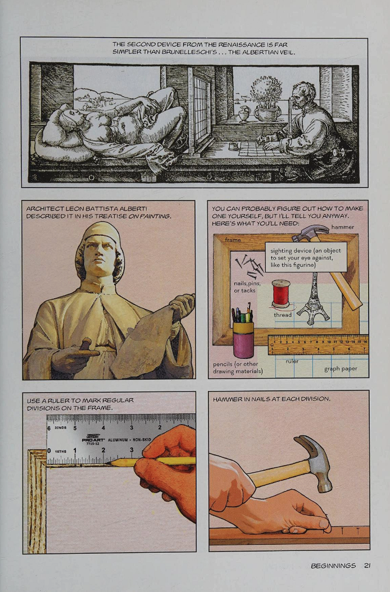
I recently ran across a book (a comic book) which I highly recommend. Titled Perspective in Action: Creative Exercises for Depicting Spatial Representation from the Renaissance to the Digital Age, it was both drawn and written by a Portland-based illustrator named David Chelsea. I regret not knowing about this earlier, since it was published back in 2017 (six years ago!) by New York: Watson-Guptill. ISBN 978-1-60774-946-2. Fortunately, it is still available online, and I now own a copy.

There are various reasons why I recommend this book (the cover isn’t one of them). The interior comic-style images are beautifully rendered and colorized, and the page layout is very smart. It interweaves a well-written and reliable text, both historical and technical, with clear and thoughtful instructions on how to make physical models of the demonstrations in the text.


That would be enough to recommend it. But I am also drawn to it because it covers so many of the vision-related topics that I myself have researched and written about since the 1960s, of which the history of perspective is one. But there is also the use of the camera obscura as a drawing aid. Anamorphoses or “forced perspective” imagery, including street art illusions. Dutch perspective cabinets. The Ames Demonstrations, devised by American optical physiologist Adelbert Ames II, including the Ames Distorted Room (there are instructions on how to make a model, in exacting detail). Six-Point Perspective. Various kinds of stereoscopic (3-D) imagery, and even stereo collage (which I thought I invented back in c1984). And zoetrope (flip book) animations. Wow! What more could you want.

So look for this book! It’s well worth it. And you might also take a look at my own recent video trilogy on the life and work of Ames, since it touches on many of the same subjects. The videos are found online at my YouTube Channel. They are completely free to view and to share with others. See two screen grabs below.


Monday, June 19, 2023

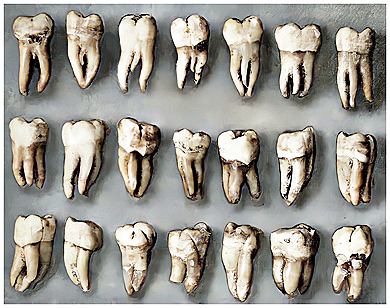
if Vincent Van Gogh had been a dentist instead

Woody Allen, “If the Impressionists Had Been Dentists” in Without Feathers. New York: Random House, 1975, p. 199— 

Dear Theo—

Will life never treat me decently? I am wracked by despair! My head is pounding! Mrs. Sol Schwimmer is suing me because I made her bridge as I felt it and not to fit her ridiculous mouth! That’s right!… I decided her bridge should be enormous and billowing, with wild, explosive teeth flaring up in every direction like fire! Now she is upset because it won’t fit in her mouth! She is so bourgeois and stupid, I want to smash her! I tried forcing the false plate in but it sticks out like a star burst chandelier. Still, I find it beautiful. She claims she can’t chew! What do I care whether she can chew or not! Theo, I can’t go on like this much longer! . . .

Vincent

a new practical guide to art in relation to seeing

coming soon
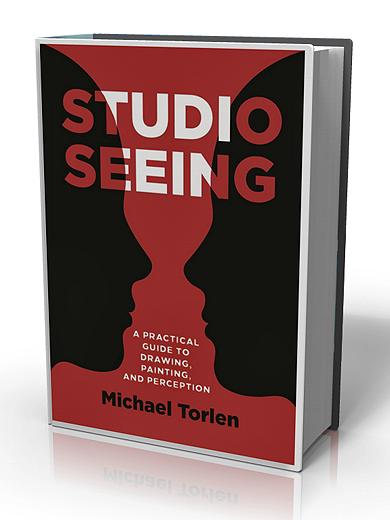
There’s a new book in the works—it isn't out yet, but it's coming. Issued by the University of Chicago Press, it will soon be available in hardbound, paperback, and E-book formats. The title peaks my interest: STUDIO SEEING: A practical guide to drawing, painting, and perception. It is due out in September. The author is Michael Torlen, a painter, printmaker and writer who retired from teaching in 2012, and now resides in Maine. A graduate of Ohio State University and Cranbrook Academy, he taught courses in visual arts for many years at the University of Georgia at Athens, and at Purchase College in New York.

How do I know him? I don’t, or at least we've never met in person. But we are well-acquainted “online,” as they say, because about ten years ago, by chance we discovered that we have a common interest in, not just art and vision, but in the writings and teaching practices of an artist / teacher (in the 1940s and thereafter) named Hoyt Sherman. At OSU, Sherman was the teacher of Pop Artist Roy Lichtenstein. But he was also the teacher of one of my most influential teachers, a man named David Delafield. Torlen’s link to Sherman is far more direct: he earned an MFA at OSU and actually worked closely with Sherman.

My additional interest in Sherman is through his connection to artist and optical physiologist Adelbert Ames II, who invented the Ames Demonstrations, about whom I have written, and more recently made a three-part documentary video on.

At OSU, Sherman reconstructed many of the Ames Demonstrations. But the achievement for which he was famous (or, as his detractors would probably say, “infamous”) was his attempt to teach drawing in the dark. He devised a method of teaching drawing in a pitch dark studio (called a “flash lab”) in which his students drew from abstract images that he projected on a screen, using a tachistoscope, for a fraction of a second. His students included members of the OSU football team, who (it was claimed) improved their passing accuracy by wearing a hooded contraption called a “flash helmet.”

Judging from its table of contents (as well as the title), the key concern in Torlen’s book is perception in relation to art, from the view of a long-experienced teacher. You can learn much more about him as well as updates on his book at <https://www.michaeltorlenauthor.com/>.


Friday, June 9, 2023

reality lacks solidity when compared to illusions

Del Ames, The Man Who Made Distorted Rooms, Part 1
Stark Young, The Pavilion: Of People and Times Remembered, of Stories and Places. NY: Charles Scribner’s Sons, 1951, p. 187—

Art’s function is to extend life into dream; since reality, for all its being so close at hand, is beyond us; it is actually far more incapable of definition than the maddest vision. For us the actuality of real things has no solidity as compared to the reality of our illusions and the precision of our emotions. We know only too well the truth of that line in French that man who can create countless gods cannot create even a flea.

See also

Adelbert Ames, Fritz Heider, and the Chair Demonstration

The Artistic and Scientific Collaboration of Blanche Ames Ames and Adelbert Ames II

Adelbert Ames and the Cockeyed Room

Wednesday, June 7, 2023

hoop and holler when little pig got under skirt

Stark Young, The Pavilion: Of People and Times Remembered, of Stories and Places. NY: Charles Scribner’s Sons, 1951, p. 106—

My father had a brother-in-law, Uncle Henry Hargis, who had married my Aunt Elizabeth. She had been long since dead and the only thing remembered about her was that she went on wearing hoopskirts years after they were given up, because her legs were too weak for skirts pressuring against them, and that a little pig had got under the hoop one day and the more she kicked and screamed the higher he jumped.

wheel collapsed, heart pierced by bicycle spoke

Above Harry G. Aberdeen, graphite and watercolor (1936), from the Index of American Design. Collection of the National Gallery of Art. Public domain.

•••

Stark Young, The Pavilion: Of People and Times Remembered, of Stories and Places. NY: Charles Scribner’s Sons, 1951, pp. 155-156—

When I was a child I had seen a traveling medicine show where the climax was that a comedian should lie on the floor while some villainous character trampled on his middle and a stream of milk spurted up most comically out of his mouth. It was on that occasion that the star performer on a the bicycle, which at that time was a huge wheel with a small wheel at the rear, chose one of my little cousins and me to be carried in his arms, the right and the left, in thrilling figurations around the room, with danger stalking his tracks, or so we were supposed to believe; it was only a week later in some nearby town that he essayed to ride down a stairway and his wheel collapsed, and one of the spokes pierced his heart.

Friday, May 26, 2023

eyewitness account / the night of broken glass

Poster [detail] © Roy R. Behrens
Among the most despicable events in modern history is what is known as Kristallnacht (German for “Crystal Night”), or, as more commonly translated, “the Night of Broken Glass.” It refers to massive overnight rioting (a pogrom), instigated by the Nazi Party on November 9-10, 1938. It was carried out against Jewish synagogues, businesses, homes, schools, hospitals, as well as people on the street, and is said to have been triggered by the murder of German diplomat Ernst vom Rath in Paris by a 17-year-old assassin of Jewish ethnicity. It is estimated that 7,000 Jewish-owned businesses and 267 synagogues were destroyed, at least 90 citizens killed, and 30,000 Jewish males arrested. It was a foreboding of the insidious (and all but successful) attempts by Adolf Hitler and his many devotees to—in essence—recover from the humiliation of World War I, and to "make Deutschland great again." Visiting in Berlin that night was an American artist and writer named Ione Robinson (1910-1989). Eight years later, in an autobiography, she recalled what happened that horrible night, in the passages below.

•••

Ione Robinson, A Wall to Paint On. New York: E.P. Dutton, 1946—

There is still a feeling of suspense that something will happen in Berlin. We saw large groups of Storm Troopers about the city, but Freddie [a journalist friend] said they were probably ordered out to clap at some meeting.

Berlin, November 10, 1938 [the following day]
This morning the telephone rang at four o'clock. I could hear Freddie speaking quietly, and knowing something about the lives of newspapermen, I paid little attention to being awakened at such an early hour.

Later at breakfast I found Freddie sitting over his coffee, staring at the wall in from of him. Dorothy [his wife] was still in her dressing gown. There was a frightful silence when I entered thc room. I thought that someone must have died during the night.

Finally Freddie said, “Well, it has started and God only knows where it will end.” When I asked what had started, he told me calmly, “Another Jewish pogrom–because of vom Rath.”

Coming from a war, one’s nerves are atuned to violence, and I was surprised to find myself turning to Dorothy like a scared rabbit. She seemed to accept the thing that was about to happen like a trained nurse accustomed to caring for a lunatic.

Later in the morning I drove through the city with her. Everything was quiet, and the morning was so cold and damp after an hour of this cruising around that Dorothy decided the whole thing had been called off. I wanted to buy a Contax camera. I asked her to take me to a camera store. While I was examining the Contax I heard a splitting crash, followed by the noise of breaking glass. I started to run for the door of this shop but the salesman held my arm. He begged me not to look and said, “You are an American. I don’t want you to look at this Germany—these aren’t the people of my country doing this thing!”

In the furniture store across the street there was a group of young boys like our American college students. They had hatchets and crowbars in their hands and they were singing while they went about the most vicious piece of wrecking I have ever seen. They were not content just to smash an object—they methodically ground every conceivable thing to pieces; not even the walls of the store were left untouched. Long splinters of wood were left hanging like icicles. When this gang, which was comparatively small, and which any group of able-bodied men could have beaten to smithereens, had finished this store, they went singing down the street unmolested, searching out another victim.

By the time we had reached the Unter den Linden, every Jewish shop was being hacked to pieces. I was amazed at the coolness with which a wrecker would swing his ax into large plateglass window without the slightest fear of being cut by the falling glass. These people were like cold demons. They were wild with a sadistic kind of delirium. The pavements began to look as if an earthquake had struck Berlin. Objects of every description were strewn over the pavements. But the people just stood there; their faces looked dead. No one spoke a word and the police made no attempt to stop the wrecking or the looting…

I walked over to the Kurfurstendamm, which is one of the fashionable shopping streets…the same thing was happening there. I stood in front of one shop and watched the owner—an old Jewish man—being forced to pick up, piece by piece, the broken debris in front of his store. While he was doing this, the wreckers grabbed the only object that had not been torn to bits, a family photograph, and hung it on a wire in front of the doorway. And then they all took turns spitting on this picture! A baby started to cry in the arms of a young woman onlooker. She scolded the baby for crying and held it high in the air to have a better look at this “national glory!”

Towards evening, clouds of smoke curled over Berlin. The synagogues had been set on fire. I drove with Dorothy across the city to find the wife of a Jewish newspaperman working for the UPI [United Press International]. While I waited in the street I saw a man being chased by fifteen Storm Troopers. He didn't have a chance. They closed in on him like hounds after a fox. When they grabbed him he was thrown to the pavement and his skull bashed until he lay there completely unconscious. The Troopers walked calmly away, brushing off their uniforms. I stood by the car, numb with fear, and hating myself for having watched such a ghastly scene; then I realized what could happen to the hearts of men if they permitted themselves not only to indulge in such sadism, but to become passive spectators of such hideous crimes.


Thursday, May 25, 2023

window for first fifty exhibition at hearst center

A few weeks ago, I designed the exhibition mailing card (shown below at end of post) for an upcoming exhibition at the Hearst Center for the Arts (Cedar Falls IA). It is a non-juried public event that provides an opportunity for anyone—amateur and non-practicing artists included—to have their work exhibited at an art center. The theme of the annual event this year is FIRST FIFTY 2023: PATTERNS. The exhibition is on view from June 15 to August 6.

Having designed the card, I was subsequently asked to produce a six-panel window design, to promote the same exhibition. Shown above is a diagram of the window installation scheme, and below is a view of how the front of the building looked earlier this week.


Tuesday, May 23, 2023

Vladimir Tatlin's Tower of the Third International

Above Photograph of Russian Constructivist artist Vladimir Tatlin (second from left) and three of his associates in the process of constructing a model of his now famous Tower of the Third International (aka Tatlin's Tower).

•••

George Grosz, An Autobiography. Translated by Nora Hodges. Berkeley: University of California Press, 1998, pp. 178-180—

Constructivism had many followers in Russia. [Among the most prominent] was a certain [Vladimir] Tatlin, a peculiar Russian child of nature. Tatlin came from a wealthy family and had traveled in Germany before the First World War. At that time he had been a member of a famous balalaika band [in which he played the bandura] and choir [which sang in Ukrainian], which had played before Kaiser Wilhelm at court. He then became a painter and also studied at a school of technology. He got known when he exhibited his big project for a monument in Moscow [intended for construction near the Cathedral of Saints Peter and Paul] …he himself would never have called it a monument, that word was too old-fashioned and romantic, he called it the “Tower of the Third International” [at full scale, it would have been one third taller than the Eiffel Tower]. The [initial] model of this whole powerful construction was about ten feet high, consisting of all sorts of rods and bars put together at odd angles.…

…[Sometime later] I went to see Tatlin once more. He lived in a small, old, dilapidated apartment. Some of the chickens that he kept slept in his bed. They laid eggs in one corner. We drank tea, and Tatlin chatted about Berlin, Wertheim's department store, and his performance at court. There was a completely rusted wire mattress leaning on the wall behind him with a few sleeping chickens sitting on it, their heads tucked under their wings. They furnished the perfect frame to dear Tatlin as he started to play his homemade balalaika. Darkness appeared through the curtainless window; most panes had been replaced with little squares of wood. We suddenly seemed surrounded by the melancholy humor of a book by [Russian writer Nikolai] Gogol. Tatlin was no longer the ultramodern constructivist; he was a piece of genuine, old Russia. I never saw him again, nor did I ever hear of him or the formerly much discussed “Tatlinism.” He is said to have died alone, and forgotten [in 1953].•

 • According to a Wikipedia biographical text, “In 1948 he was heavily criticized for his allegedly anti-communist stance and lost his job, but was not repressed.”

•••

George Grosz, An Autobiography. Translated by Nora Hodges. Berkeley: University of California Press, 1998—

I remember [American literary critic] Edmund Wilson best coming down the steps in his beach coat; like all fat people, he looked most impressive viewed from below…Wilson is more a lobster person than a fish person: you have to use a nut cracker to get to the meat. (p. 305)

Below Vladimir Tatlin, Counter-relief (1916). Photo: Shakko, Wikimedia Commons.


Sunday, May 21, 2023

impromptu gymnastics strengthens muscularity

flag waving / anon
A.A. Milne, Autobiography. New York: E.P. Dutton, 1939, pp. 52-53—

The only occasion on which I spoke in the Debating Society was at what was called an “Impromptu Debate.” The names of the members were put into one hat, the subjects for speech into another. In an agony of nervousness I waited for my name to be called. It came at last, “Milne Three.” Milne III tottered up and drew his fate; not that it mattered, for one subject was as fatal to him as another. He tottered back to his desk and opened the paper. The subject on which he had to speak was “Gymnastics.”

I stood there dumbly. I could think of nothing. The boy next to me, misapprehending the meaning of the word “impromptu,” whispered to me: “Gymnastics strengthens the muscles.” I swallowed and said, “Gymnasthicth thtrengthenth the muthelth.” Then I sat down. This is the shortest speech I have ever made, and possibly, for that reason, the best.

• See also this great story about the “shotgun seminars” at Princeton, as well as this video essay about the nature of humor.

Saturday, May 20, 2023

the democratization of the art of brain surgery

A.A. Milne [author of Winnie the Pooh], Autobiography. New York: E.P. Dutton, 1939, pp. 310-311—

…the modern eagerness to lower standards and abolish “form” [is distressing]. It is as if democracy had said, not “[Art] shall be open to aII,” as it has every right to say, but [rather] “Achievement in [art] shall be the [assured for everyone]; which is nice for all of us, but not so good for [art]. Sometimes I think it is a pity that, having gone so far, we do not go further, and say: “Achievement in sports shall be [assured for everyone].” As a golfer I should like to be able to look contemptuously down upon the old-fashioned practice of raising the golf ball in the air, and to abolish the old-fashioned rule which says, how foolishly, that the player who does the hole in the lean number of shots shall be the winner. It is more in keeping with modern ideals (and it is also easier) to go from one point to another in a straight line rather than in a parabola, and the playing of eight shots expresses your personality, which is really all that matters, much more completely than the playing of one. But alas! in sport you can only feel superior to the champions of the past by beating them at their own game and under their own rules. In the arts you can denounce the target, change the rules, aim in a different direction, hit nothing, and receive the assurances of your friends that you are the better man.

Also see Art, Design, and Brain Research: Non-Scientific Thoughts about Neuroesthetics

Friday, May 12, 2023

social media acronyms as practiced by victorians

Above A three-panel caricature, The Pair of Skaters (1873), by one of history's finest comic illustrators (often featured in Simplicissimus), the Norwegian artist Olaf Gulbransson. His command of movement and gestural line has never been equaled.

•••

A.A. Milne, Autobiography. New York: E.P. Dutton, 1939, pp. 131-132—

One way and another we [the author and his brother Kenneth John Milne] got a good deal of happiness out of it [preparatory school], if not always in the way expected of us. We sat together now, never to be separated, in the Mathematical Sixth, which meant that we occupied one corner of a room in which some lowly mathmatical set was being taught. Since we could not talk wthout disturbing the master-in-charge we wrote letters to each other: long letters detailing our plans for the next holidays. Interest was added to these letters by our custom of omitting every other word, leaving blanks which the addressee had to fill in. Our minds were sufficiently in tune for this to be possible without being easy; one could get the general sense without being certain of the exact word. As in my old French set, we then changed papers and marked each other's mistakes. Sometimes our communications were in initial letters only. During “second school,” for instance, it was certain that one of us would ask the other “SWGUSIB?” This clearly meant “Shall we go up-Sutts in break?” a question which expected the answer “Yes” and got it. Ken would feel in his pockets and decide that, since we already owed Father 15/6, we might as well owe him sixteen shillings. We did.

Monday, May 8, 2023

the lash of the tongue of teacher Henry Tonks

Above Roy R. Behrens, exhibition card design, 2023.

•••

Bernard Leach, Beyond East and West: memoirs, portraits, and essays. New York: Watson-Guptill, 1978—

[As an art student at the Slade School of Art, he endured] the lash of the tongue of [his drawing teacher] Henry Tonks—Tonks with his gritty eye and tomahawk nose, tall in shiny blue serge, who had given up his job as house surgeon at Bart's Hospital to use his scalpel on us at the Slade; Tonks who became a second-class artist in the Impressionist manner, but a good draughtsman and perhaps the best teacher in all England. Often we saw some girl cowering in tears behind a plaster cast. He spared none; his bitter tongue was fearless and true. Here is tribute and thanks to him. His surgery changed our skins—saved our lives maybe. Tonks, who enunciated “action, construction, proportion” as the flaming guardians of the paradise of art; who, sitting on one of the student’s “donkeys” [drawing benches], after a glance at his drawing, buried his face in his hands, paused long, and then asked, “Why do you do it?”; and who once said to me grudgingly, “You may be able to draw one day.” I remember on one occasion he flung open the studio door, stood there in deadly silence, then burst out: “I want to know whether a day will come when I shall see a sign of art in this room,” and slammed the door behind him.

Monday, April 24, 2023

the absurd continuing access to weapons of war

Without hesitation, I can say that one of my favorite artists is the German printmaker and sculptor Käthe Kollwitz (1867-1945). I became acquainted with her work in 1964, when I was 18 and a freshman art student in undergraduate school. In the university’s art collection was one of Kollwitz’s finest lithographs, titled Death and the Woman (1934), reproduced below. 

Many of her most powerful works are self-portraits. One reason that they are so powerful is that her own appearance was so dignified, yet strikingly sad and remorseful, a quality that is equally true of photographs of her. Reproduced above is the commemorative relief profile that was issued as a German coin in 1967. And at the bottom of this blog post is surely one of her most unforgettable self-portraits, an etching titled Self-Portrait with Hand on Forehead (1910). In 1914, her sadness was intensified when her youngest son Peter was killed in World War I, only two days after arriving at the battlefield. 

The awful grief of losing her son remained with her until her own death, a sorrow that she tried to assuage by designing a gravesite memorial to him (and other soldiers), now at the Vladslo German war cemetery in Belgium. At that gravesite, she installed two mourning figures, she and her husband, side by side, known as The Grieving Parents

I was reminded of this lately when my friend, the distinguished German psychologist and neuroscientist Lothar Spillman, brought up her name, and recalled what she said at the time of her loss: “Where do those women find the courage to send their dear ones to the front to face the guns when they watched over them all their lives with loving care?” Today, not only do those mothers face the “weapons of war” on the battlefields of Ukraine, Sudan and elsewhere—but, in our own country, on the formerly innocuous neighborhood streets.

In 1996, PBS broadcast an eight-part video series on The Great War. In the final episode is a brief but memorable section about Käthe Kollwitz, the death of Peter, and the gravesite memorial. It can be accessed free online on YouTube. The portion that pertains to Käthe Kollwitz begins around 21 minutes into the film. I strongly recommend it. Do take a look, at a time when we too face—increasingly and every day—the needless killing of people with war-grade weapons.


Sunday, April 23, 2023

tao te ching / the space within defines the pot

Above One of a series of posters (2023) intended to commemorate the Index of American Design, a Depression-era US government program, which commissioned unemployed graphic designers / illustrators to make detailed renderings of historic craft and folk art. The original paintings, now in public domain, can be accessed on the website of the National Gallery of Art.

I was first introduced to Lao-Tse’s famous sayings from the Tao Te Ching in the summer of 1964 when, at age seventeen, I studied for the summer in California at Pond Farm with Marguerite Wildenhain. In 1919, she had been among the first students at the Weimar Bauhaus, where Itten was one of her teachers. A few days ago, I found the passage noted below.

•••

Jack Pritchard, “Gropius, the Bauhaus and the Future” in Journal of the Royal Society of Arts. Vol 117 No 5150 (January 1969), pp. 75-94—

When discussing problems of space, Johannes Itten [head of the Bauhaus foundations course] was fond of quoting from Lao-Tse, who in the sixth century BC wrote [in revised wording]:

Thirty spokes converge at the hub,
But it is the space between the spokes that forms the essence of the wheel.

The walls of a vessel are made of clay, but its essence is determined by the space within the pot.…

• This saying is also referred to in a recent video on ART, DESIGN AND GESTALT THEORY: The Film Version.

Herbert Simon / the fruits of being colorblind

Arcimboldo, Fruit Basket (c1590)

Above Painting by Giuseppe Arcimboldo titled Fruit Basket. Oil on panel, c1590. It is a reversible still life of fruit. Turned upsidedown (as shown here), it resembles the head of a person.

•••

Herbert Simon, Models of my life. NYC: Basic Books, 1991, p. 5—

Whether during his fourth summer or on some later occasion, the boy [the author] was among a party picking wild strawberries. The others filled their pails in a few minutes; there were only a few strawberries in the bottom of his. How could the others see the berries so easily amid the closely matching leaves? That was how he learned that strawberries are red and leaves green, and that he was colorblind

•••

Postscript As Simon comments in his autobiography, he would later marry a woman with red hair. In view of his being colorblind (he continues): “'How did you know her hair was red?' the perceptive reader might wonder. Well, I had early been told that there were no green-haired people, nor any red lawns. Ergo. . . ."

In relation to the use of ambiguous, pun-like images in art (such as this painting by Arcimboldo), it may also be of interest to view my recent video called EMBEDDED FIGURES, ART AND CAMOUFLAGE.

Wednesday, April 5, 2023

Index of American Design / Toy Rocking Horse

Poster / Roy R. Behrens (2023)


Index of American Design / Dog Doorstop

Poster / Roy R. Behrens (2023)


Index of American Design / Billethead of Ship

Poster / Roy R. Behrens (2023)


Index of American Design / Toy Circus Wagon

Poster / Roy R. Behrens (2023)


Index of American Design / Dappled Toy Horse

Poster / Roy R. Behrens (2023)

Index of American Design / Hand Cradles Rock

Poster / Roy R. Behrens (2023)

Index of American Design / Weathervane Bird

Poster / Roy R. Behrens (2023)


Monday, March 27, 2023

South Bear School reopens for summer 2023


In a series of online talks on the history of design that I recently gave for Drake University's OLLI life-long education program, I spoke about the Bauhaus, which began in Germany in 1919. I discussed the influences of its teachers and students, some of whom emigrated to the US, where they joined existing schools or established their own. One of those schools was called Pond Farm, near Guerneville CA, where Marguerite Wildenhain worked with about twenty students each summer. 


Iowa potter Dean Schwarz and I were among her students in 1964. He returned in later years to be her assistant, and then established his own summer school, called South Bear School, near Decorah IA. He and his wife, writer Geraldine Schwarz, compiled and edited a huge, rich book about Wildenhain's life, titled Marguerite Wildenhain and the Bauhaus: An Eyewitness Anthology (South Bear Press, 2007), as shown in illustrations here. 


South Bear School, Decorah IA
The senior Schwarzes have retired, but there is a coalition of younger ones who are carrying on the tradition. In the coming summer (2023), they are again offering workshops at South Bear School, and the call for registration is out. More online information is here.

Sunday, March 12, 2023

the offense of telling the same thing twice

Alan Fletcher
Above Alan Fletcher [British designer], model of one of twelve proposals for outdoor drinking fountains (made in stone, one meter high), in which each fountain is shaped to form the silhouette of a famous cultural figure, through reversible figure-ground. This one is the silhouette of Albert Einstein. As reproduced in Fletcher, Picturing and Poeting. London: Phaidon, 2006, p. 103.

•••

Vyvyan Beresford Holland [the second son of Oscar Wilde], An Evergreen Garland. London: Cassell 1968, Page 156-157—

My next case [of how to deal with boring people] is that of the horrible habit of repetition, often known as "twicing." This is the offense of telling the same person the same thing twice. Unfortunately, everyone over the age of forty is to some extent a "twicer," because he refuses to remember to whom he has told his stock stories, and he is apt to forget any new stories he has heard. He is also apt to be much too interested in his past life to care very much whether his victim has heard his stories, so long as he can get someone to listen to them once more, particularly if they happen to be true, or were true before they were embroidered out of all recognition. And it is almost worse if he says, "Do stop me if I’ve told you this before," because one should never run the slightest risk of repeating oneself to other people. On the whole, it is far better not to tell stories at all unless either you invited them yourself or they are very short.

The remedy for "twicing" is contained in: 

Rule VI.—As soon as one is certain that a case of "twicing" is about to occur, one should interrupt the "twicer" roughly by telling him that his story reminds you of another one, and then proceed to tell him his own story, with added detail. That is, if he will let you.

Friday, March 10, 2023

familiar american icons / artifacts made strange

Above Dust jacket for Brooke L. Blower and Mark Philip Bradley, eds., The Familiar Made Strange: American Icons and Artifacts After the Transnational Turn. Ithaca NY: Cornell University Press, 2015.  Available online at Internet Archive.

•••

In browsing, I was struck by the power and appropriateness of this book cover (annoyingly, the cover designer goes unmentioned). The contents of the book are equally interesting, such as “William Howard Taft’s Drawers” by Andrew J. Rotter, and “Josephine Baker’s Banana Skirt” by Matthew Pratt Guterl. As noted in an earlier blog post, it was a Nebraska expatriate playwright named Virgil Geddes whose job it was to assist Josephine Baker in donning her famous scanty banana attire at the Folies Bergere.

The often-quoted phrase “to make the familiar strange” can be traced to an essay titled “Art as Technique" by Russian formalist critic Victor Shklovsky, first published in 1917. His term for the process was defamilarization or ostranenie. I myself prefer this translation of what he wrote—

Habitualization devours works, clothes, furniture, ones wife, and the fear of war…And art exists that one may recover the sensation of life; it exists to make one feel things, to make the stone stony. The purpose of art is to impart the sensation of things as they are perceived and not as they are known. The technique of art is to make objects “unfamiliar,” to make forms difficult, to increase the difficulty and length of perception because the process of perception is an esthetic end in itself and must be prolonged. Art is a way of experiencing the artfulness of an object, the object is not important.

In The Novel of the Future (1968), the writer Anaïs Nin rephrased Shklovsky’s concept in a brief (and perhaps too familiar) form as follows—

It is the function of art to renew our perception. What we are familiar with we cease to see. The writer shakes up the familiar scene, and as if by magic, we see a new meaning in it.

As I have written elsewhere, I became acquainted with Victor Shklosky’s ideas during years of corresponding with American writer Guy Davenport. It eventually occurred to me that there is a reciprocal process, of equal value in the innovation process, which might be called “making the strange familiar.”

Monday, March 6, 2023

Versluis and Behrens working out the Iowa bugs

Iowa Insect Series, David Versluis and Roy R. Behrens
More than ten years ago (if you can believe it), my good friend and fellow designer David Versluis (we have both since retired from university teaching) decided to collaborate. Actually, he came up with a plan, and asked if I were up to it.

Over the years, he had amassed an assortment of (kaput) Iowa insects. His proposal was to scan those, at high resolution, and to send me the scans by email, one at a time. I had free rein. After receiving the scanned image, I had to alter it someway—major or minor—for the purpose of making a digital montage, using Adobe Photoshop. I would then send it back to him, and he in turn would make a move—and pass it back to me again.

We did this fairly rapidly, and after five or six back-and-forth sessions, we soon mutually came to suspect that the work was finished. The ones that I especially recall are a beetle, a cicada, a dragon fly, and a hornet (above, in a cropped version) that was eventually found to be not a hornet but a yellow jacket wasp. In a few short weeks we ended up with a substantial, original cluster, titled the Iowa Insect Series.

After finishing the series, it was David’s initiative to print them at large scale, and to be watchful of competitions or exhibitions which they could be submitted to. For almost a decade, they were exhibited multiple times (through his efforts) at various galleries and museums around the country. The most recent one that I recall was an exhibition last year at the University of Wisconsin-Madison, called Evolving Graphic Design.

However, I have just now learned from David that two of the pieces have recently been accepted for an upcoming exhibition—called Awake! Printmaking in Action, at the Ann Arbor Art Center in Michigan, which will run from April 14 through May 28, 2023.

Sunday, February 26, 2023

graphic design / indispensable tools of the trade

Above and below Still frame excerpts from a video talk, titled Art Design and Gestalt Theory: the film version (2023), about the organizing principles that are fundamental to human vision, including accents (above), unit-forming factors, and closure (below). Nothing is more indispensable to design-based organizing skills, including graphic design


Monday, February 20, 2023

novelist jerzy kosinski / visage of a painted bird

The Embellished Bird
James Park Sloan, Jerzy Kosinski. New York: Dutton, 1996, pp. 336-337—

On weekends he [the novelist Jerzy Kosinski] sometimes went with George and Freddie Plimpton and their crowd to Pimpton’s mother’s place in West Hills, where parlor games were the order of the day. They playing hiding games like “murder” and “sardines”…To Plimpton’s surprise, after all his talk about hiding, in his apartment and during the war, Kosinski was not particularly good at the hiding games…
On the other hand, he demonstrated his ability to fold himself neatly into a bureau drawer, and when the situation was under his control, he played his usual pranks. 

••• 

Gabrielle Selz, UnStill Life. W.W. Norton, 2014, p. 145—

In between her crying jags [in response to her husband’s departure], she [the author’s mother] dated. Once a man with thick black hair and the large beaked nose of a bird came to the front door to pick her up. He was introduced as Jerzy Kosinski, the author of a controversial book my mother had on her shelf, The Painted Bird, about a boy surviving the Holocaust. They didn’t go out for long. Kosinski was an eccentric who liked to disappear. Mom once discovered him curled up and hiding in a large bureau drawer. He was too strange for her tastes.